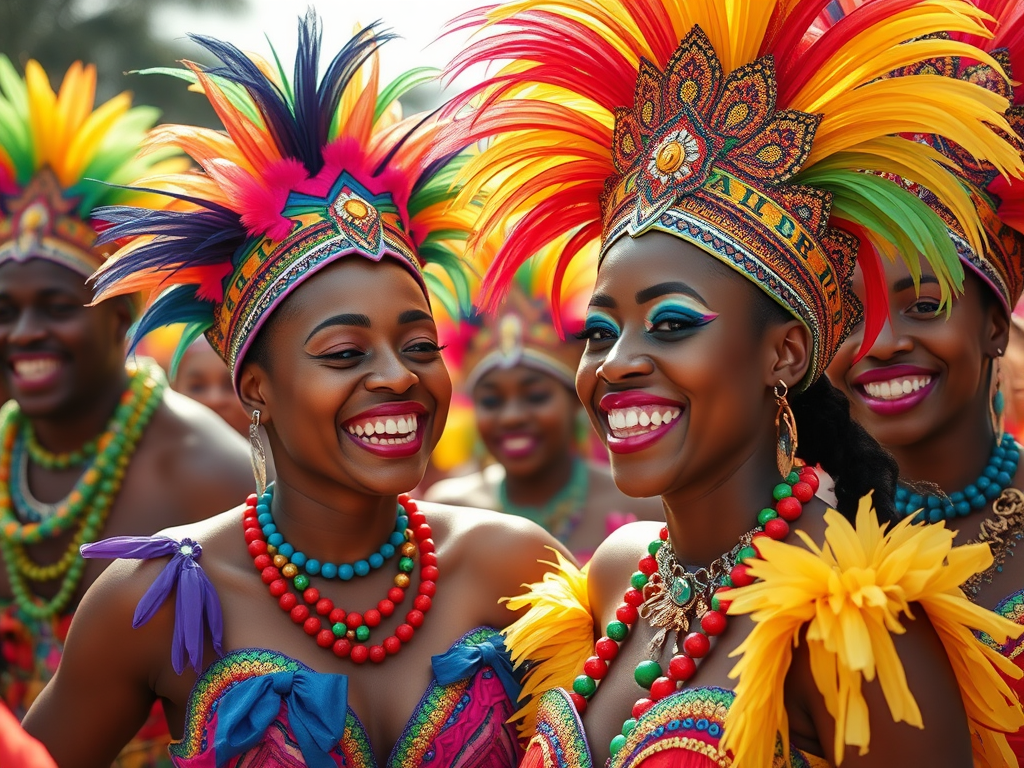
Carnival in the Caribbean is a vibrant celebration that stitches together European masquerade traditions with African rhythms and liberation tales, transforming itself into a lively cultural emblem of freedom and resistance. Rooted deeply in history, this dynamic festival expresses a narrative of hybrid heritage through energetic dance, music, and vibrant costume parades.
Key Takeaways
- Caribbean carnivals merge European and African cultural influences, reflecting a diverse and rich historical narrative.
- Initially rooted in masquerade balls introduced by European settlers, the carnival evolved with African-infused elements such as rhythmic drumming and dance.
- The abolition of slavery transformed carnival into a celebration of freedom and community, further enriched by moments like the Haitian Revolution.
- Iconic celebrations such as Trinidad and Tobago Carnival captivate with colorful costumes, music styles like soca and calypso, and influential figures in carnival artistry.
- Carnivals stand as significant cultural events representing resistance and freedom, uniting communities and global visitors in shared celebration.
The rich tapestry of Caribbean carnival traditions is woven from both European and African threads. Centuries ago, European settlers introduced masquerade balls and Mardi Gras festivals, forming the skeleton of what would become today’s vibrant celebrations. African slaves, upon their forced arrival, infused these events with rhythmic drumming, dance, and raw energy, creating a powerful cultural fusion. This blending was more than just pageantry; it was a form of defiance, especially post-emancipation. The abolition of slavery marked a critical turning point, transforming carnival into a celebration of freedom, identity, and community.
Significant historical milestones, like the Haitian Revolution in the early 1800s, further influenced Caribbean carnivals. As enslaved people claimed their freedom, they intertwined their struggle stories with traditional European festivities, turning carnival into a powerful medium for storytelling and resistance.
Take Trinidad and Tobago Carnival, for example. It stands as one of the world’s largest and most vibrant celebrations, captivating attendees with its kaleidoscope of colors and sounds. Rooted in a history of liberation, its narrative is told through the rhythms of calypso, soca music, and the ceremonial ‘mas‘.

Cultural Significance of Carnival
Carnival in the Caribbean is more than a vibrant explosion of color and rhythm; it’s a cultural emblem that binds communities together through shared history and spirited expression. Often seen as a living tapestry of the region’s hybrid heritage, carnival serves as a powerful vehicle for social commentary. Amidst the pulsating soca beats and breathtaking costumes, the carnival showcases narratives of resistance and freedom, reflecting the Caribbean’s intricate history.
According to cultural anthropologist Dr. Rita Bailey, “Carnival is the jubilation of overcoming and the embodiment of Afro-Caribbean identity.” This sentiment resonates deeply with festival-goers who repeatedly highlight the unique merging of past and future that carnival represents. As Sarah, a seasoned Trini carnival enthusiast, puts it, “When I dance J’ouvert morning, I’m not just celebrating; I’m honoring my ancestors and embracing my roots.”
Visiting a carnival is a transformative experience for cultural enthusiasts and festival-goers. Remember to secure your accommodations and activities ahead of time to enhance your journey.
Through dynamic parades and expressive artistry, the carnival continues to reinforce Caribbean identity, offering an inclusive space where every reveler becomes part of a sprawling, timeless story.

The vibrant world of Caribbean carnival costumes is a feast for the senses, weaving a tapestry of tradition, rebellion, and creativity. Rich, vivid colors illuminate the streets as revelers don costumes that embody cultural narratives passed down through generations. Each hue, pattern, and intricate beadwork holds a story—red might signify energy and passion, while blue brings protection and serenity.
In crafting these masquerade outfits, designers engage in an art form that bridges history and innovation. Notable artisans like Trinidad and Tobago’s Peter Minshall reimagine classic styles, infusing them with contemporary flair while honoring the spirit of masquerade. You can witness this craft in action at “Mas Camps”, where teams transform their visions into elaborate costumes. Observing the meticulous construction is an experience in itself, as artisans cut, sew, and embellish, imbuing each piece with life.
For those wanting to fully immerse in the carnival magic, consider getting around with a trusted service to reach these vibrant cultural hotspots.

Music and Dance at Carnival
Music weaves a vibrant tapestry through every corner of the Caribbean’s carnival, setting hearts racing with the irresistible beats of Soca, Calypso, and Reggae. These genres, intertwined with the legacy of steelpan bands and energetic rhythms, pulse through the carnival streets, infusing life into every dance move. Imagine the electric atmosphere as pulsating beats invite festival-goers to immerse themselves in celebratory dance traditions like the infectious whine or the spirited jump up.
At the heart of these festivals, you’ll be mesmerized by live performances from renowned artists like Machel Montano, Destra Garcia, and Bunji Garlin. Each performance is not just a show; it’s an experience that entangles every attendee in an exhilarating communal rhythm. Global genres have long borrowed from the vivacity of carnival music, influencing modern tastes and sounds worldwide.
If you plan on exploring these musical celebrations, ensure you have easy access to all the hot spots with a convenient airport transfer service.

Food and Drink Traditions During Carnival
Culinary Delights Await
Carnival in the Caribbean is as much a feast for the taste buds as it is for the eyes and ears. The aroma of jerk chicken grilling on an open flame is nearly impossible to resist, accented by the vibrant spices and smoky heat. In Trinidad and Tobago, the streets buzz with vendors serving up doubles, a savory treat filled with curried chickpeas that’ll have you savoring every bite. And then there’s the timeless favorite, roti—stuffed with your choice of succulent meats or flavorful vegetables, wrapped in a soft, warm flatbread.
Drink and Be Merry
Nothing says Caribbean carnival quite like sipping a refreshing rum punch, bursting with the flavors of tropical fruits and the unmistakable warmth of locally distilled rum. For those seeking a non-alcoholic refreshment, fresh coconut water is a hydrating delight, cracked open right before your eyes by local caretakers of the tradition.
Whether you’re at a bustling street party or a leisurely beachside gathering, indulging in these culinary creations is a community affair. Sharing these meals is an integral part of the carnival spirit, fostering connections and celebratory joy. And hey, if you’re making your way to these celebrations, consider using Klook for booking unique experiences and activities to make your carnival adventure smooth and unforgettable.

Exploring the kaleidoscope of Caribbean carnivals reveals a vibrant tapestry of island cultures, each adding its own hues to this grand celebration. Trinidad’s carnival is a sensory explosion, with J’ouvert signaling the pre-dawn start of festivities through streets alive with paint, mud, and music. This grand event attracts hundreds of thousands of tourists annually, fueling the island’s economy and making significant contributions to its cultural tourism.
In contrast, Jamaica’s carnival takes a more rhythmic approach, where dancehall and reggae beats pulse through the streets. Its carnival may be newer, but Jamaica’s infectious energy and musical prowess make it unforgettable.
Moving to Barbados, the “Crop Over” festival celebrates the end of the sugar cane harvest with lively parades and parties. Crop Over has evolved into a cultural highlight, welcoming over 50,000 visitors each year.
Grenada adds its own twist with “Spicemas,” featuring unique traditions like “Jab Jab” and colorful parades celebrating emancipation, capturing the island’s historical struggles and triumphs in a jubilant fashion.
To fully immerse in these festivities, consider seamless airport transfers for stress-free travel across the islands with Welcome Pickups, ensuring you’re ready to indulge in the carnival spirit as soon as you land.
Visiting these carnivals is more than just a trip—it’s a journey through the Caribbean’s diverse cultural journey, each carnival reflecting the island’s heart and soul.

FAQ: Caribbean Carnival
Q1: What cultural influences shape Caribbean Carnival?
A1: Caribbean Carnival blends European masquerade traditions with African rhythms and stories of liberation, creating a vibrant cultural celebration of freedom and resistance.
Q2: How did the abolition of slavery impact Caribbean Carnival?
A2: The abolition of slavery transformed Carnival into a celebration of freedom, community, and identity, turning it into a powerful expression of resistance and storytelling.
Q3: What are some iconic music styles featured in Caribbean Carnival?
A3: Soca, calypso, reggae, and steelpan music are popular styles that energize carnival celebrations with lively beats and dance rhythms.
Q4: Which Caribbean carnival is known as one of the largest and most colorful?
A4: Trinidad and Tobago Carnival is one of the largest and most vibrant, famous for its colorful costumes, soca music, and elaborate parades like J’ouvert.
Q5: What traditional foods are commonly enjoyed during Caribbean Carnival?
A5: Popular carnival foods include jerk chicken, doubles (curried chickpeas in fried flatbread), roti, and refreshing drinks like rum punch and fresh coconut water.
Q6: How do carnival costumes represent Caribbean heritage?
A6: Costumes use vivid colors, intricate beadwork, and traditional patterns to tell cultural stories, blending historical symbolism with artistic creativity.
Q7: Can visitors easily travel between carnival events and hotspots?
A7: Yes, services like Welcome Pickups offer reliable transportation to carnival venues and cultural sites, ensuring a smooth and enjoyable experience.

Leave a Reply